
When you become a parent, you start reading ingredient labels you never looked at before. You switch to organic fruit where you can. You think twice about plastic containers in the microwave. You become, sometimes almost overnight, the kind of person who cares about things you never used to care about.
And then you make rice porridge in the same non-stick cooker you've had for six years, the one with the coating that's started to look a little worn in the middle, and it doesn't cross your mind to question it.
That's worth thinking about.
The non-stick surface in most conventional rice cookers is made from a synthetic polymer called PTFE, which you might also know as Teflon. It works well when the coating is intact. The issue is what happens when it isn't.
Non-stick coatings degrade. Heat cycling, metal utensils, abrasive cleaning, and just general use all contribute to the surface breaking down over time. Once it starts to flake, the question of whether those particles end up in your food stops being theoretical. There's ongoing research into the health implications of PFAS compounds, the chemical family that includes PTFE and PFOA, and while the science is still developing, the direction of that research hasn't been particularly reassuring.
For adults eating a variety of foods across the day, the risk calculation looks one way. For an eight-month-old eating rice porridge cooked in a pot with a visibly degrading surface, it looks different. Babies' systems are smaller, their bodies are still developing, and they eat the same few foods repeatedly in concentrated amounts. The precautionary argument is stronger.
A ceramic inner pot is not coated with anything. It's a clay-based material all the way through. There's no synthetic layer to peel or break down over time, nothing to monitor, nothing that compromises over years of use. What goes into the pot stays in the pot.
This sounds simple, and it is. But it's worth being clear about one distinction, because "ceramic-coated" and "fully ceramic" are not the same thing. A ceramic-coated inner pot has a ceramic finish applied over a metal base. It's an improvement on PTFE, but it's still a surface layer that can degrade with enough use. A fully ceramic pot is the material itself, not a coating on top of something else.

These rice cookers use the latter. Natural ceramic throughout the inner pot. No PTFE, no PFOA, no synthetic chemistry. There's genuinely nothing to peel.
Rice porridge deserves a specific mention here because if you're cooking for a baby, it's probably in the rotation a lot. Congee, zhou, okayu, whatever your household calls it, it's one of the most common first foods in Asian-Australian kitchens and for good reason. Easy to digest, adaptable, and forgiving for new eaters.
What most parents don't consider is that porridge is actually one of the more demanding cooking applications for an inner pot. The long cooking time, the starchy liquid sitting in contact with the surface while the cooker holds everything at temperature, the repeated daily use: if the coating is compromised at all, this is the context where any transfer is most likely to happen.
A fully ceramic pot removes that concern. Cook the porridge, serve it, wash the pot. That's it.
There's also a straightforward cooking argument that has nothing to do with safety.
Ceramic holds and distributes heat differently from metal. It warms evenly from all sides rather than primarily from the base, which is closer to how traditional clay pot cooking actually works. Anyone who's eaten congee made in a real clay pot knows there's something different about the texture, the way the starch breaks down, the way it feels when you eat it. The ceramic cooker gets closer to that result than a standard metal pot does. The rice grains break down more evenly, the porridge comes together more smoothly. You can taste it if you pay attention.
Cleaning is worth mentioning too. With non-stick cookware, you're always managing the surface. Soft utensils, gentle sponges, nothing abrasive, no soaking for too long. The coating is the whole point of non-stick, so the coating is also what you're perpetually trying to protect.
With ceramic there's no surface to manage. It wipes down easily and you're not thinking about how to do it. For a family cooking rice and congee multiple times a week, that matters in a small but real way over time.

Nobody is suggesting you overhaul everything in your kitchen. The rice cooker is just a good place to start, specifically because it's used so often, because the inner pot is in direct contact with food for extended periods, and because the foods you cook in it for young children tend to be the softest and most absorbent.
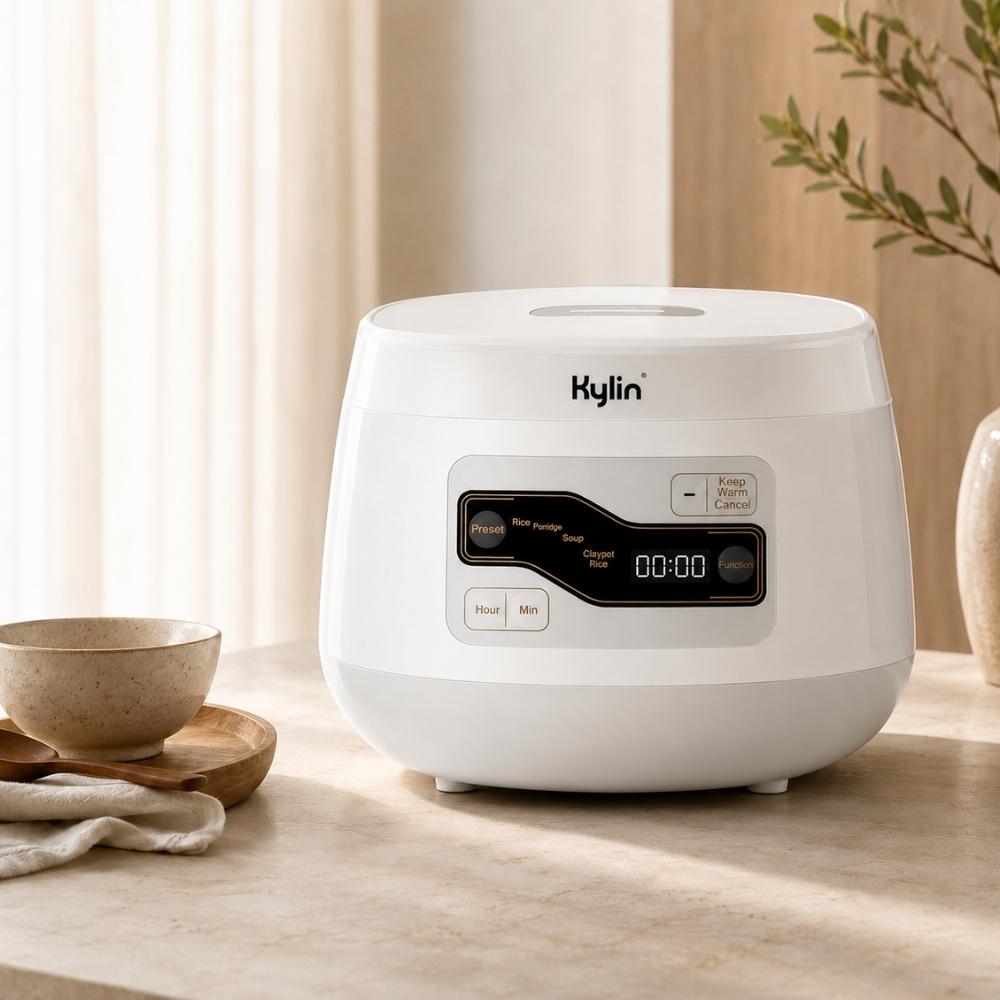
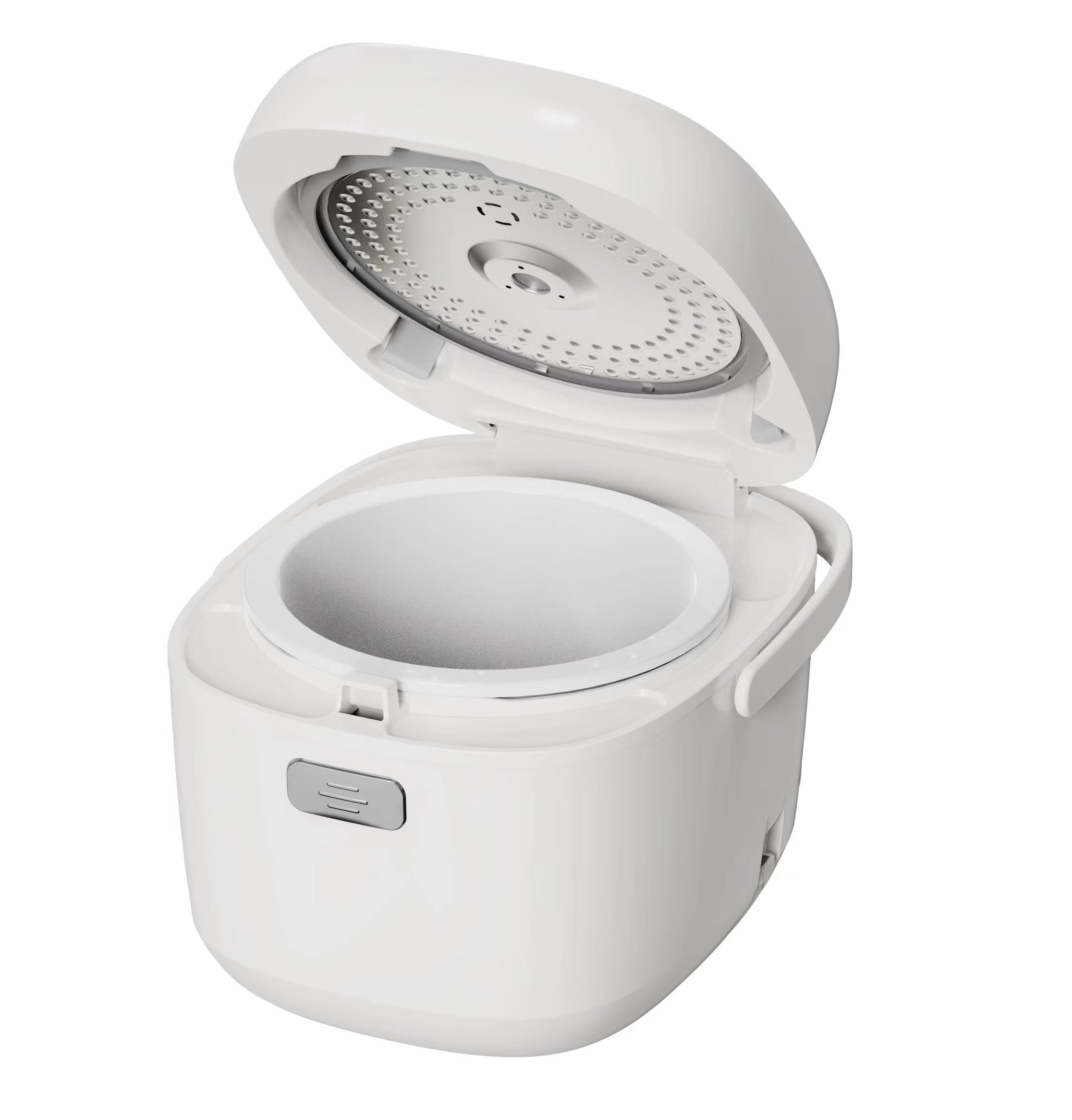
The ceramic rice cooker range covers a few different household sizes, from a compact 3-cup option through to an 8-cup multi-function model. Free from PTFE and PFOA across the board, fully ceramic inner pots, and honestly the congee really does come out better.